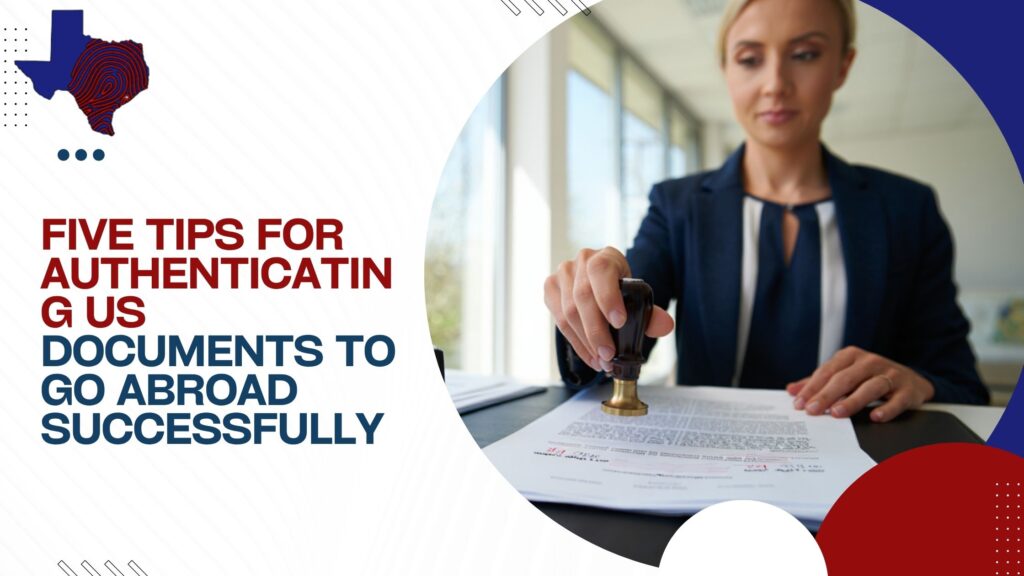
Planning to go abroad often involves more than booking a flight and packing bags. One of the most vital steps is preparing your documents properly. All you need are apostilles and authentication certificates attached to your document – whether you are expanding your business internationally or planning to move for marriage or study. US is part of the Hague Apostille Convention, enabling documents to be recognized in more than 125 countries worldwide through a simplified verification process.
Here is a simple guide to get your important document ready:
Key Steps to Follow During Document Verification
If you are planning to go outside of the United States, you must be properly prepared to prevent any delay or denial from the authorities. Let us explore 5 tips to follow to avoid any issues for your move:
1. When and How to Get an Apostille?
You will need an apostille if the country you want to visit is on the 1961 Hague Convention member list. Documents issued by a U.S. state will need an apostille from that state’s secretary of state, whereas Federal documents will need an apostille from the U.S. Department of State.Getting your documents to the correct authority helps avoid delays and ensures faster processing. If you need help determining where to send your documents, it is advised to visit the U.S. Department of State for detailed guidance and requirements.
2. How to Get an Authentication Certificate?
If your destination country is not a party to the 1961 Hague Convention, you’ll need an authentication certificate for your paperwork.
Here’s what idea you should have:
- Which state and federal documents need authentication
- How to get an authentication certificate
- How to check your record status
- Fees, submission options, and where to send them
By getting your paperwork right the first time, you can avoid unnecessary delays.
3. Know Which Documents Need Authentication
One of the most important steps that you should take before traveling overseas is identifying which documents must be verified. Common papers that often require verification are:
- Birth certificates
- Marriage certificates
- Business agreements
- Power of attorney documents
- Background checks
- Medical records
Different nations have different requirements. For instance, a country listed in the Hague Apostille Convention may only require an apostille, while others may need embassy legalization
4. Verify Documents Before Submitting
Before beginning authentication, you must review your documents carefully. Errors such as misspelled names, missing signatures, or incorrect dates can delay the process.
You should double-check things such as:
- Names match the passport exactly
- Dates are accurate
- Presence of signatures
- Documents are readable
- Copies are properly certified
Even a small error can cause rejection or delay. So, if you’re unsure, consult an expert Notary Services in Spring, ensuring what records are needed to meet the requirements.
5. Start the Process Early
Validation often takes longer than expected. Processing times vary depending on factors like the type of document, state requirements, and destination country. Some authentications can take a few days, while others may take several weeks. So, starting early gives you enough time to resolve any issues and smoothly complete the process.
End Note
Preparing documents for international use requires careful attention and planning. Following the tips outlined above helps you avoid surprises and achieve a smooth move abroad.
To make the process even smoother, you can consult Texas Fingerprint & Notary, a trusted agency for notary service in Texas. We ensure reliable solutions for your identification needs. Book your appointment and focus on your plans abroad stress-free.